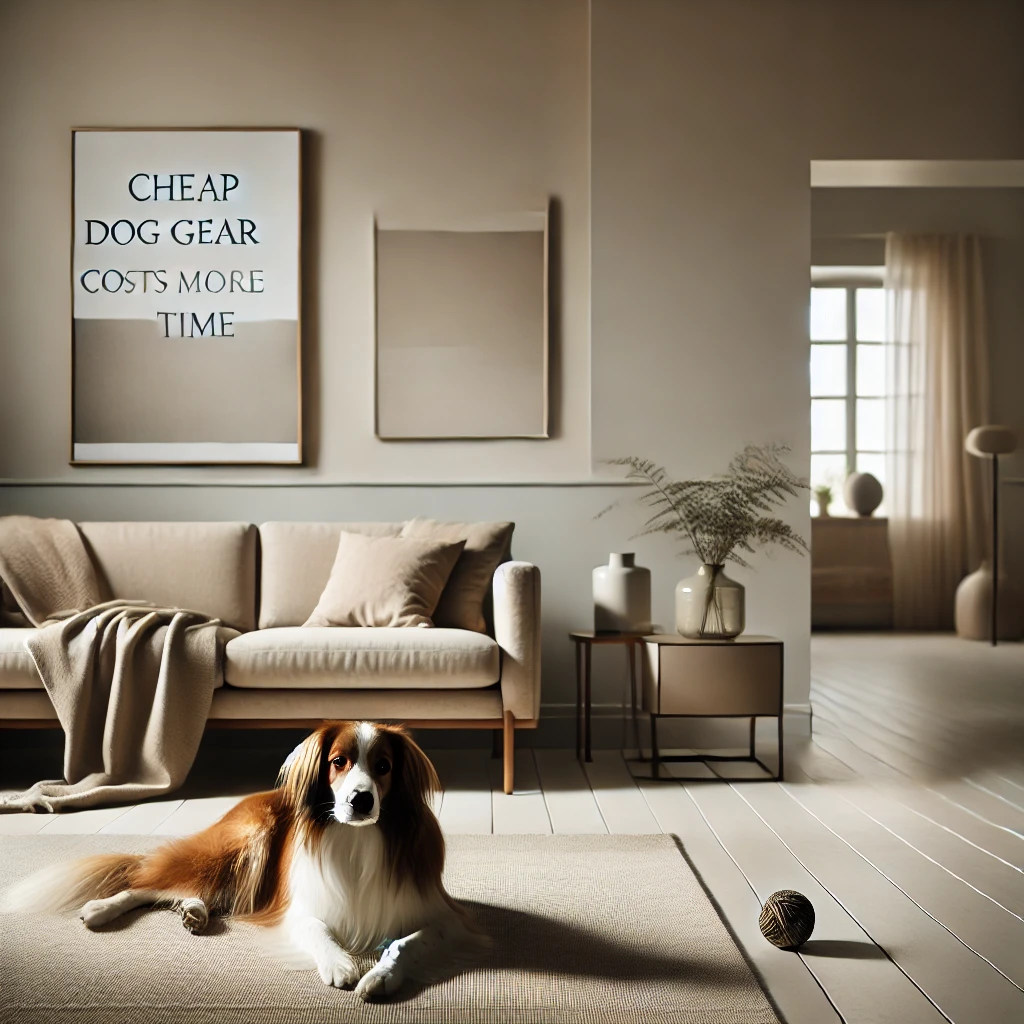
Cheap dog gear often feels like a smart choice—especially when you’re buying multiple items or just trying to get the basics in place. But “cheap” usually isn’t a final price. It’s an ongoing cost paid in replacements, frustration, clutter, and sometimes safety risk.
This article breaks down why inexpensive dog products so often cost more over time, how to avoid “fake premium” upgrades, and what to upgrade first if you want fewer, better essentials that support calm daily routines.
The Real “Cost” of Dog Products Isn’t the Price Tag
Price is only one part of the cost. The real cost is what the product demands from you over time: how often you replace it, how much friction it creates in daily use, and what happens when it fails.
Replacement cycles
If a leash frays, a bed collapses, or a toy breaks every few weeks, you’re paying the same category cost repeatedly. Over a year, “cheap” becomes expensive—just distributed across multiple purchases.
Routine friction
Many low-cost items are harder to live with. They trap hair, hold odor, stain easily, slide around the floor, or require extra cleanup. Those small annoyances compound because they show up daily.
Safety risk
Cheap hardware and weak construction can fail under tension. In some categories, failure is not merely inconvenient—it can be unsafe. Durability is not a luxury feature when the product is load-bearing or used outdoors.
Five Ways Cheap Dog Gear Costs More Over Time
1) It fails faster (weak materials and weak seams)
Cheap products commonly use thinner materials and less reliable stitching. The item may look fine at first, but wear shows up quickly: seams loosen, edges fray, padding collapses, and the product becomes less functional long before it should.
Practical check: stress points should be reinforced, not merely stitched once. If a product is meant for daily use, it should look and feel like it can handle daily use.
2) Hardware breaks first (clips, buckles, zippers)
When dog gear fails, hardware is often the first culprit. Clips that feel light, buckles that flex, rings that look thin, or zippers that catch repeatedly are all common failure points.
Practical check: if the hardware doesn’t feel solid in your hand, it will not improve over time. In daily-use categories, hardware quality is a strong predictor of long-term value.
3) It’s harder to maintain (odor, pilling, trapped hair)
Low-cost fabrics and finishes frequently trap hair and hold odor. Some materials pill quickly, making products look worn long before they are technically “broken.” Others absorb moisture and become difficult to clean thoroughly.
Practical check: if cleaning feels complicated or ineffective, the item will become a source of friction. Premium products tend to be easier to care for because they’re designed for real life, not just photos.
4) It can create behavior friction (overstimulation or discomfort)
Not all “cost” is financial. Some products create overstimulation (especially in toys), while others introduce discomfort (poor fit, irritating edges, unstable designs). When daily routines feel uncomfortable or chaotic, dogs often become less settled.
Practical check: the best products leave your dog calmer, not more wound up—and they should not create irritation, awkward movement, or routine stress.
5) It encourages clutter (buying more instead of choosing better)
Cheap purchases often lead to accumulation: multiple versions of the same item category, backups that become unnecessary, and replacements that pile up. The house gets fuller, but routines don’t get easier.
Practical check: if you keep buying “alternatives” because nothing feels right, the issue is often quality, not variety. Fewer, better choices reduce clutter quickly.
“Expensive” Isn’t the Answer Either
Many people respond to cheap disappointment by swinging hard in the other direction: buying the most expensive option available. That can work—but it can also be an expensive way to learn that price and quality are not the same.
Fake premium branding
Some products present as premium through aesthetics: muted colors, minimal logos, high-end photography, and “luxury” language. But the construction and materials are still mid or low quality. Real premium is revealed by details: stitching, reinforcement, hardware, usability, and care durability.
Trend tax
Novelty is often priced like an upgrade. But trend-driven features don’t always improve daily life—and they rarely improve durability. When evaluating “premium,” prioritize function and longevity over novelty and excitement.
What to look for instead: quiet reliability
Quiet reliability is the real standard. The best essentials feel stable, simple, easy to maintain, and built for daily use. They are not loud. They just work.
What to Upgrade First (Highest ROI Essentials)
If you want to spend strategically, start with categories that impact your dog every day. These upgrades typically create the biggest improvement in routine calmness and long-term value.
Daily-use walking gear
Leashes, collars, and harnesses are used constantly and often under tension. This is one of the most reliable places to invest in better materials, better hardware, and better construction.
Comfort and rest essentials
Rest influences everything: mood, regulation, and energy throughout the day. Comfort products that hold their shape, clean well, and support your dog’s body tend to pay off over time.
Everyday feeding basics
Bowls, feeders, and daily home basics should be stable and easy to maintain. If a product makes daily routines messier or harder, it is not a good value—even if it was inexpensive.
Enrichment tools that last
Enrichment is valuable, but not all toys are built for repeatable use. Choose tools that support calm engagement and hold up to your dog’s real play style.
The “Buy Once” Framework (A Simple Decision Tool)
If you want a clean way to evaluate any product, use this framework:
- If it’s used daily, quality matters more. Daily contact creates cumulative impact.
- If failure creates risk, upgrade immediately. Hardware and load-bearing items must be dependable.
- If it’s hard to clean, it will become a problem. Ease of care is part of quality.
This approach prevents overbuying and reduces replacement cycles over time.
The Planet Petopia Standard: Fewer, Better Basics
At Planet Petopia, we focus on fewer, better essentials that support comfort, durability, and calm daily routines. We’re not interested in urgency, hype, or trend cycles. We’re interested in products that hold up, integrate easily, and help your dog feel more settled day to day.
If you want the full framework for evaluating quality across categories, start with our pillar guide: Premium Dog Products Buyer’s Guide.
Final Thought
Cheap dog gear is rarely a problem on day one. It becomes a problem on day twenty, day sixty, and day one hundred—when the seams loosen, the clip fails, the odor won’t come out, or you realize you’ve bought the same category product three times.
Start small. Upgrade what you use every day. Choose reliability over novelty. Over time, fewer, better choices create a calmer routine—and that is the real premium.
Continue learning:
For a deeper, category-by-category framework, visit the Premium Dog Products Buyer’s Guide.